

Hey there, amazing educators! Welcome to the digital playground where we turn static ideas into breathing, bouncing, and sometimes exploding, realities. You’re the captains of this ship, guiding a new generation of animators, VFX artists, and designers through the wild seas of creativity. And today, we’re going to talk about something that’s both fundamental and frequently misunderstood: frame rates. Or, as I like to call it, the secret sauce that makes or breaks your animation.
The "What Even Is a Frame Rate?" Section (Don't Worry, It's Easy)
Okay, so let’s get down to brass tacks. You know how a flipbook works, right? You draw a little stick figure on each page, and when you flip them fast enough, it looks like it’s running. That, my friends, is animation in its purest form. A frame rate is simply the speed at which we’re flipping those pages. We measure it in “frames per second,” or FPS.
Imagine you’re making a movie. At 24 FPS, you’re showing 24 unique pictures every single second. At 60 FPS, you’re showing 60. More pictures per second means a smoother, more fluid motion. Fewer pictures? Well, that’s where things get interesting.
The "Why Should I Care as a Teacher?" Section
Now, I know what you’re thinking. “My students are just learning the basics! Why confuse them with technical jargon?” Here’s the deal: understanding frame rates isn’t just about technical know-how; it’s about ethical responsibility. It’s about teaching your students to be mindful, purposeful creators.
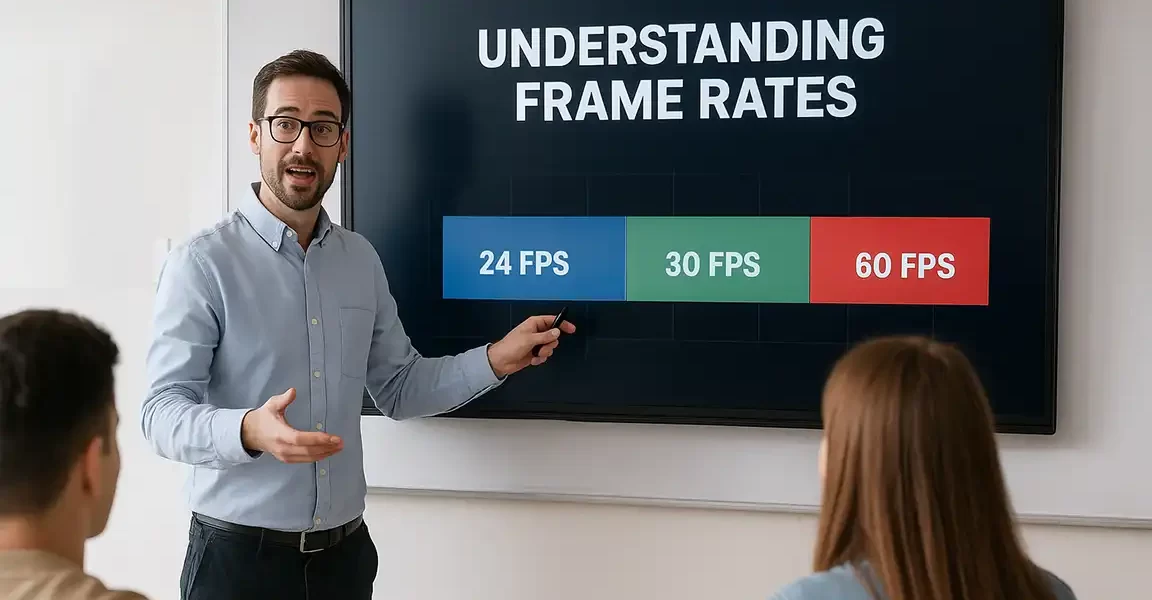
- The 24 FPS Gold Standard: For decades, 24 FPS has been the standard for film and television. Why? It creates a specific kind of motion blur that our brains are used to. It’s cinematic. When you teach your students to animate at 24 FPS, you’re teaching them a language. You’re giving them a tool that connects them to the rich history of cinema.
- The 30 FPS TV Special: Most TV shows and digital content on platforms like YouTube often use 30 FPS. It’s a bit smoother than 24 FPS, giving a slightly different feel. It’s important for your students to understand that different platforms have different standards, and choosing the right frame rate is a creative decision, not just a technical one.
- The 60+ FPS Video Game Revolution: Ever wonder why video games look so incredibly smooth? That’s the magic of 60 FPS and beyond. This is where your students need to understand the difference between artistic intent and technical necessity. A fast-paced fighting game needs a high frame rate for responsiveness. A slow, atmospheric art piece might not.
The "How to Teach This Without Boring Them to Tears" Section (The Fun Part!)
This is where your teaching superpowers come into play. Here are a few ways to make this topic not just bearable, but actually exciting:
- The Flipbook Challenge: Start with the basics. Give each student a small stack of paper and have them create a simple flipbook. Then, have them try to “animate” a quick action. This hands-on experience will make the concept of individual frames and their collective impact instantly clear.
- The “Same Animation, Different FPS” Demo: Take a simple bouncing ball animation. Render it at 12 FPS, 24 FPS, and 60 FPS. Show them side-by-side. The difference will be dramatic and self-explanatory. This is where you can have a great discussion about what each frame rate communicates emotionally. Does the 12 FPS version feel more whimsical or “old-timey”? Does the 60 FPS version feel more “real” or “uncomfortably smooth”?
- The Ethics of FPS: This is the most crucial part. Talk to your students about ethical considerations. For example, some animated features deliberately use lower frame rates to create a specific aesthetic (think Spider-Man: Into the Spider-Verse). It was a conscious choice. Explain that they have a responsibility to not just blindly pick a frame rate, but to choose one that serves their creative vision. A high frame rate might not always be the “best” choice. It might make a character’s movement look unnaturally sterile. It’s about being an artist, not just a technician.
Remember, you’re not just teaching them to push pixels; you’re teaching them to tell stories. Frame rates are just another tool in their storytelling toolbox. It’s a bit like teaching a musician the difference between a quarter note and an eighth note. They’re both notes, but they create a completely different rhythm and feel.
So, go forth and inspire! Help your students understand that a frame rate isn’t just a number in a dropdown menu. It’s a deliberate choice, an ethical consideration, and a powerful element of artistic expression. And hey, if you mess up a render or two along the way, that’s okay! We’ve all been there. It’s all part of the beautiful, frustrating, and incredibly rewarding journey of animation. Now go make some magic!